基板試作を簡単に

フル機能のカスタム基板試作サービス。

Surface Finishing

Laser engraving

Laser engraving is widely used in industries such as jewelry, gifts, and electronics, enabling precise patterns and text engravings, enhancing product value and personalized customization.

Get a quote

Introduction to Laser engraving

Laser engraving
Laser engraving
Description

Laser engraving is the use of laser technology to engrave text and pattern on objects. The characters engraved by this technology have no nicks, the surface of the object is smooth, and the text and pattern will not wear out.
Kindly note that laser engraving can be made only on flat surfaces. ONLY Ai and svg formats are acceptable and meanwhile mark the dimension and placement on the 2D technical drawings.

Technical Properties

Applicable Sharp edges and burrs Premium appearance availability Tolerances
Metals, Plastics Removed No Met after surface finish

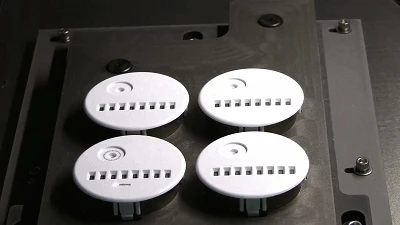
Example of a Laser engraving Part

Laser engraving
Laser engraving

CNC Laser Engraving Finish Guide

1. Principles of Laser Engraving

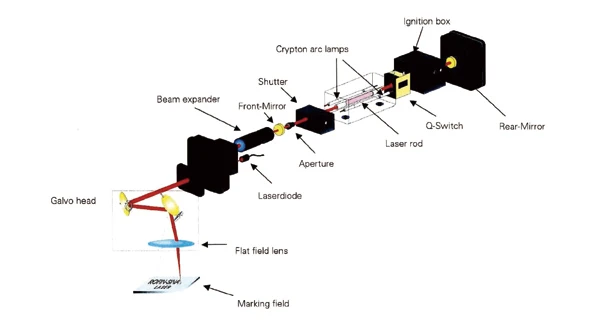
Laser engraving, also known as laser marking, is a laser processing technique that uses a focused laser beam to irradiate a material surface, causing physical or chemical changes that create permanent text, patterns, or markings. This is a non-contact process, meaning the laser does not need to touch the workpiece, making it suitable for fine details and intricate designs. Laser energy and focal position can be precisely controlled by computer to achieve high-resolution engraving.

Laser Engraving Principle

2. Types of Laser Engraving

Laser engraving can be divided into two main types based on the engraving method: raster engraving and vector cutting.
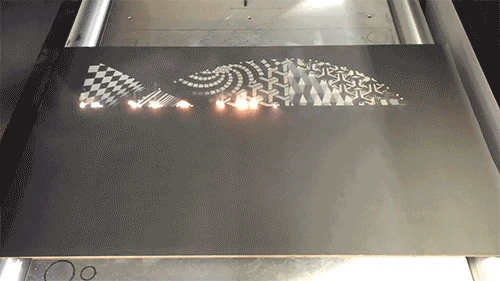
Raster Engraving: Similar to high-resolution dot-matrix printing, raster engraving works by moving the laser head back and forth horizontally, marking a line composed of a series of dots with each pass. The laser head then moves vertically to engrave multiple lines, forming a complete image or text. Raster engraving can be used for scanned graphics, text, and vector-based artwork.

Types of Laser Engraving

Vector Cutting: Unlike raster engraving, vector cutting follows the outlines of graphics and text. This method is commonly used for through-cutting materials such as wood, paper, and acrylic. It can also be used for surface marking on a wide range of materials.

Vector Cutting

3.Laser Engraving Finish Types

Finish Type Appearance Suitable Substrates Common Applications
Surface Color Change (Discoloration/Oxidation) No noticeable recess; smooth to the touch. Only the surface color changes, producing clear text or patterns without a cutting effect. Anodized aluminum, plastics, painted parts Product nameplates, serial numbers, logos, consumer electronics housings
Deep Laser Engraving (Material Removal) Creates a tactile recess with well-defined edges. Engraving depth is controllable, and some recesses can be filled with paint. Aluminum, copper, stainless steel, hard plastics Structural component markings, paint-filled logos, mold engraving
Black Laser Marking Forms a dense black oxide layer with little or no noticeable recess. Produces uniform color and high contrast. Anodized aluminum alloys (most common), certain stainless steels Logos on premium electronic product housings, decorative patterns
White/Light Gray Laser Marking Laser treatment creates a microscopically roughened surface that scatters light, producing a whitish appearance with a slightly grainy feel. Stainless steel, titanium alloys Markings on metal decorative components, medical device nameplates
Coating Removal (Paint Stripping) The laser removes the surface paint or powder coating, exposing the underlying substrate and its original metallic appearance. Powder-coated parts, spray-painted parts Two-tone logos, backlit characters on buttons
Texture Engraving (Large-Area Surface Texturing) Repeated laser scanning creates continuous microtextures, including matte or simulated brushed finishes. Suitable for large areas beyond text and symbols. CNC-machined aluminum, stainless stee Decorative surface textures, anti-slip areas

4.Laser Engraving Design Considerations

4.1. Minimum Line Width / Character Size

Avoid designing lines that are too fine. As a general reference, the minimum line width for stable laser engraving should be ≥0.08 mm (fiber laser). For small logos and text, a minimum line width of ≥0.12 mm is recommended to prevent broken lines and blurred edges. The minimum engravable line width may increase on curved surfaces and in areas with small radii.

4.2. Corners and Narrow Edges

Sharp corners, tight-radius transitions, and thin-wall areas are prone to heat accumulation during laser engraving, which may cause yellowing, substrate deformation, or cracking. Avoid large-area laser engraving on thin walls where possible.

4.2. Corners and Narrow Edges

Sharp corners, tight-radius transitions, and thin-wall areas are prone to heat accumulation during laser engraving, which may cause yellowing, substrate deformation, or cracking. Avoid large-area laser engraving on thin walls where possible.

4.3. Depth Control

For shallow engraving (color change / black marking), keep the depth below 0.02 mm where possible to maintain a smooth surface without a noticeable tactile recess. Deep laser engraving removes material and may affect dimensions and assembly, so depth tolerances should be specified on engineering drawings. Avoid deep engraving on mating surfaces.

4.4. Curved and Angled Surfaces

Large angled surfaces and curved surfaces may result in variations in focal distance, causing uneven contrast across the pattern. Minimize the engraving area on highly curved surfaces or use 3D laser engraving.

4.4. Multilayer Coatings (Coating Removal on Spray-Painted / Powder-Coated Parts)

Variations in coating thickness can affect the coating removal results. If the coating is too thin, the laser may locally penetrate and damage the substrate. If the coating is too thick, carbon buildup and blackening may occur along the edges.